
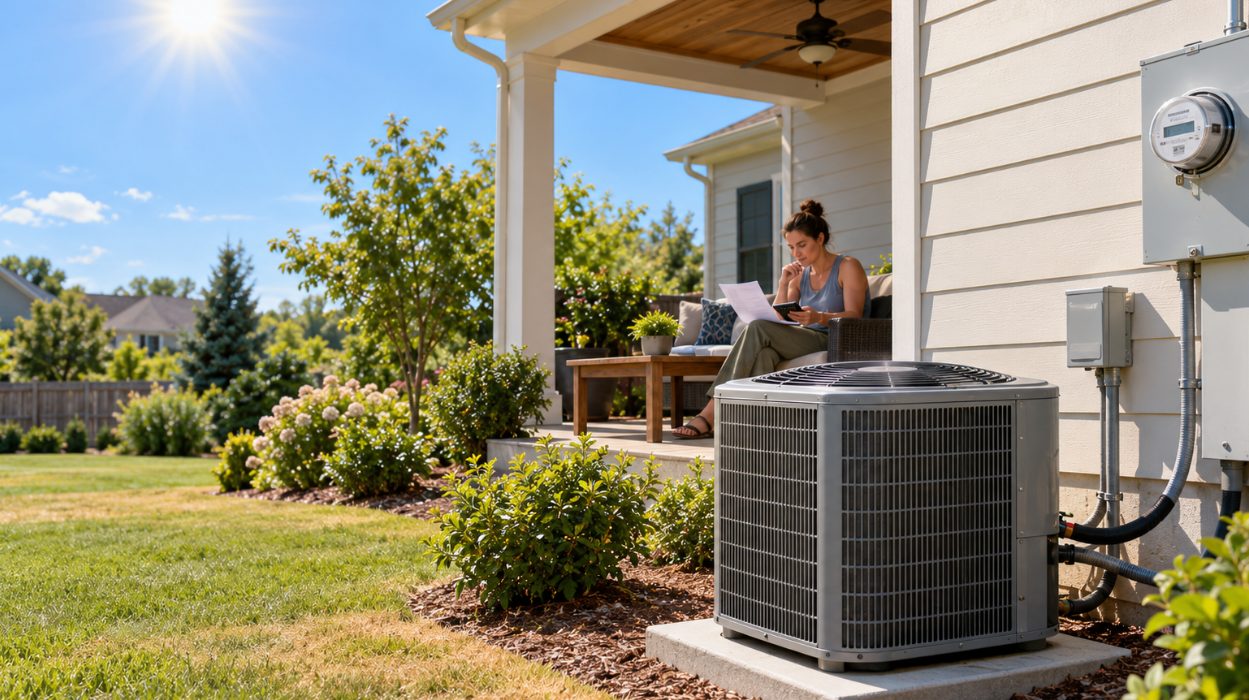
Why does your electric bill spike during the summer? You open your July or August bill and wonder how it got so high. In most homes, the first suspect is the air conditioner, and it's usually the right one. Home electricity use rises in summer mainly because of air conditioning. Homes in hot, humid southern states often use much more power for cooling than homes in milder places.
But air conditioning isn't the only reason summer bills climb. A summer spike can come from a mix of things:
- Longer AC run times in extreme heat
- High humidity
- Poor insulation or air leaks
- Dirty filters or aging cooling equipment
- Pool pumps, dehumidifiers and fans
- More people at home and more appliance use
- Higher utility rates or time-of-use pricing
The useful question is which of these is happening at your house.
Your Air Conditioner Is Working Much Harder
Your AC doesn't use a set amount of electricity each day. Its energy use depends mostly on how long it runs. Say you keep your house at 75°F. On an 80°F day, the AC has a small gap to close. On a 102°F day, it fights a much bigger and steadier flow of heat into the house.
That means longer cooling cycles, more time with the compressor and fan running, and more electricity every day. Across the country, electricity demand climbs as temperatures rise. In summer it usually peaks in the afternoon and early evening, when air conditioners work hardest.
Your thermostat setting may not have changed at all. The weather changed how hard your system has to work to hold that setting.
Why Humid States Like Florida and Texas See Big Jumps
Heat is only part of the story. Humidity matters too, especially in Florida, Texas, North Carolina, Georgia, Louisiana and other hot, humid areas. Your air conditioner doesn't just remove heat. It also pulls moisture out of the indoor air.
In humid climates, the system may need to run longer to keep the home both cool and comfortable. That's a big reason homes in states like Texas tend to have high summer electric bills.
Why Arizona Has a Different Version of the Same Problem
Arizona doesn't have Florida's humidity, but extreme dry heat brings its own challenge. When it's well over 100°F outside, heat pours into the house through the attic, roof, windows, walls, doors and air leaks. The bigger the gap between indoor and outdoor temperatures, the harder your cooling system works.
Holding 72°F inside when it's 110°F outside asks far more of your system than cooling the same house on an 85°F day. Again, the thermostat setting didn't change. The workload did.
Heating and Cooling Is Usually the Biggest Load
ENERGY STAR estimates that nearly half of the energy in a typical home goes to heating and cooling. That's why small changes in how long your AC runs can show up clearly on your bill.
Say your AC normally runs six hours a day. During a heat wave, it may run several hours longer. Multiply those extra hours across a 30-day billing period, and the difference can be large.
Higher Usage or Higher Electricity Rates?
This is one of the most important things to figure out. Your bill comes down to how much electricity you use × what your utility charges for it. If your bill went from $200 to $300, there are three possible reasons:
- You used more electricity. Your rate stayed about the same, but your AC ran much longer.
- Electricity got more expensive. Your usage stayed about the same, but your rate went up.
- Both happened. You used more power and paid more for each kWh. This is where the most painful jumps come from.
So don't just compare the dollar amounts. Compare the kWh too.
Start With the kWh Number
Your bill shows how many kilowatt-hours (kWh) of electricity you used in the billing period. Compare this July's kWh with last July's. If the bill rose a lot but your kWh didn't, price is likely a big factor. If both rose sharply, your home is using more electricity. Now you can start asking why.
Your AC May Be Losing Efficiency
Higher summer use doesn't automatically mean something is wrong. But unusually high use can point to problems such as:
- Dirty air filters or dirty outdoor coils
- Refrigerant problems
- Blocked airflow or leaky ducts
- Failing parts, skipped maintenance or aging equipment
ENERGY STAR recommends checking your filter every month during heavy-use seasons, because a dirty filter blocks airflow and makes the system work harder. Regular maintenance also helps equipment run efficiently. If your AC runs constantly and the house still isn't comfortable, it's worth looking into.
Your House May Be the Problem, Not the AC
Your air conditioner can only remove the heat that gets into your home. If heat pours in faster than it should, even good equipment will struggle. Common causes include:
- Poor attic insulation or ventilation
- Air leaks and unsealed gaps
- Leaky ductwork
- Old windows and doors
- Strong afternoon sun
Think of your home like a cooler. If the lid doesn't seal, the cooling system has to keep working to replace the cold air you lose. Sealing air leaks and adding insulation can cut heating and cooling losses and make the home more comfortable.
Your Thermostat Setting Matters More Than You Think
On a 100°F day, there's a big difference between holding 78°F and holding 70°F. The lower the setting, the harder the system works. A small change can often reduce cooling without giving up much comfort.
Ceiling fans can help too. They let you set the thermostat a little higher and still feel comfortable. But remember: fans cool people, not rooms. Turn them off when you leave the room.
Pool Equipment Can Be a Hidden Summer Load
In warm states, the AC may not be the only big summer load. Pool pumps, spa pumps, heaters, cleaners and water features can all use a lot of electricity. Many homeowners run the pool pump longer in summer because the pool gets more use and hot weather calls for more filtering. Pool pumps, fans and dehumidifiers all add to summer electricity use. If your summer usage jumps unexpectedly, check the pool equipment.
More People at Home Means More Electricity
Summer changes routines. Kids are home from school, people may work from home and guests visit. That means more cooking, laundry, showers, computers, TVs, gaming, device charging and hot water. It also means opening doors more often. Each item may seem small, but together they add up.
Your refrigerator works harder too. The kitchen is warmer, the door opens more often and it's often fuller. It won't use anywhere near as much as central air, but it adds to summer demand. And the heat appliances give off is more heat your AC has to remove.
Time-of-Use Rates Can Make Summer Power Cost More
Some utilities charge different prices depending on when you use electricity. On a time-of-use plan, power can cost more when demand on the grid is highest. Unfortunately, that's often when your home needs the most cooling: a hot afternoon means heavy AC use at peak prices.
Shifting flexible loads can lower costs even if you don't use less overall. You can often move EV charging, laundry, the dishwasher, the pool pump and home battery charging to cheaper hours. Check your utility's rate plan to see whether time-of-use or seasonal pricing applies to you.
How Can You Tell If Your Summer Bill Is Normal?
Compare your bills, and look at more than the total:
- Dollar amount: how much you're paying
- Total kWh: how much electricity you're using
- kWh vs. the same month last year: whether your usage changed
- Price per kWh: whether electricity got more expensive
- Average daily use: whether household demand went up
- Outdoor temperatures: whether the weather explains the change
Then ask three questions: Did my rate change? Did my usage change? Did the weather change? Those answers usually explain most of the difference.
When a High Summer Bill Points to an AC Problem
Consider having your system inspected if you notice several of these at once:
- The AC runs almost nonstop.
- The home doesn't reach the thermostat setting.
- Some rooms stay unusually warm.
- Usage rose much more than the weather explains.
- Airflow from the vents is weak.
- You hear unusual noises, or the system turns on and off often.
- Indoor humidity is rising.
- The equipment is aging and needs repairs more often.
A high bill alone isn't enough to say your system is failing. But a high bill plus less comfort and unusually long run times deserves attention.
10 Ways to Lower Your Summer Electric Bill
Before you assume you need solar or a new AC, start with the basics:
- Check your air filter. A dirty filter blocks airflow and makes the system work harder.
- Get your AC serviced. A tune-up can catch airflow, refrigerant, electrical and mechanical problems.
- Raise the thermostat a little. Even a small change can cut cooling time.
- Use ceiling fans wisely. Run them in rooms you're using, and set the thermostat a bit higher.
- Seal air leaks. Keep cool air in and hot air out.
- Check your attic insulation. The attic can be a major source of heat.
- Block afternoon sun. Blinds, shades and outdoor shading can help.
- Review your pool pump schedule. Make sure it isn't running longer than it needs to.
- Shift flexible loads. On a time-of-use plan, move EV charging, laundry, dishwashing and pool pumping away from peak hours.
- Compare your actual energy use. Don't diagnose the problem from the dollar amount alone. Look at the kWh.
Should You Replace Your AC Because of One Big Bill?
Not just because of one big bill. That's an expensive conclusion to draw from one piece of information. Look at the system's age, cooling performance, repair history, energy use and efficiency. Also look at your insulation, ducts, air leaks and utility rates. An inefficient system may be part of the problem. But a new AC won't fix poor attic insulation, air leaks or a very low thermostat setting.
Would Solar Fix a High Summer Electric Bill?
Possibly, but it depends on why the bill is high. Summer can be a strong season for solar because of long, sunny days. That often lines up well with high summer electricity use. But the smarter order is to understand the load first, then decide how to address it. If your home wastes electricity because of a struggling AC or major air leaks, fixing those first may shrink the solar system you'd need.
So, Why Did Your Electric Bill Spike This Summer?
For most homes in hot climates, the answer starts with air conditioning. But don't stop there. Look at:
- How many kWh you used
- What you paid per kWh
- How hot and humid the billing period was
- How well your AC performed
- Whether other summer loads went up
A high summer bill usually isn't a mystery. It comes from measurable changes in usage, price or both. Once you know which changed, you can decide what, if anything, to do about it.
The Ashborn Approach
At Ashborn Partners, we don't start by asking how many solar panels fit on your roof or how fast we can replace your AC. We start by asking why your house is using this much electricity. An Advisor separates rate increases from AC use, weather, home efficiency, pool loads, household habits, equipment problems and other loads. Then you can weigh real options. Sometimes that's AC maintenance. Sometimes it's insulation or air sealing, new equipment, solar or a mix. And sometimes you don't need to buy anything at all. Ashborn connects you with participating providers serving your area.
The diagnosis should come before the product.
Electricity use and bills vary with weather, home size and construction, equipment, household habits and utility rate plans. Examples in this guide are hypothetical.