
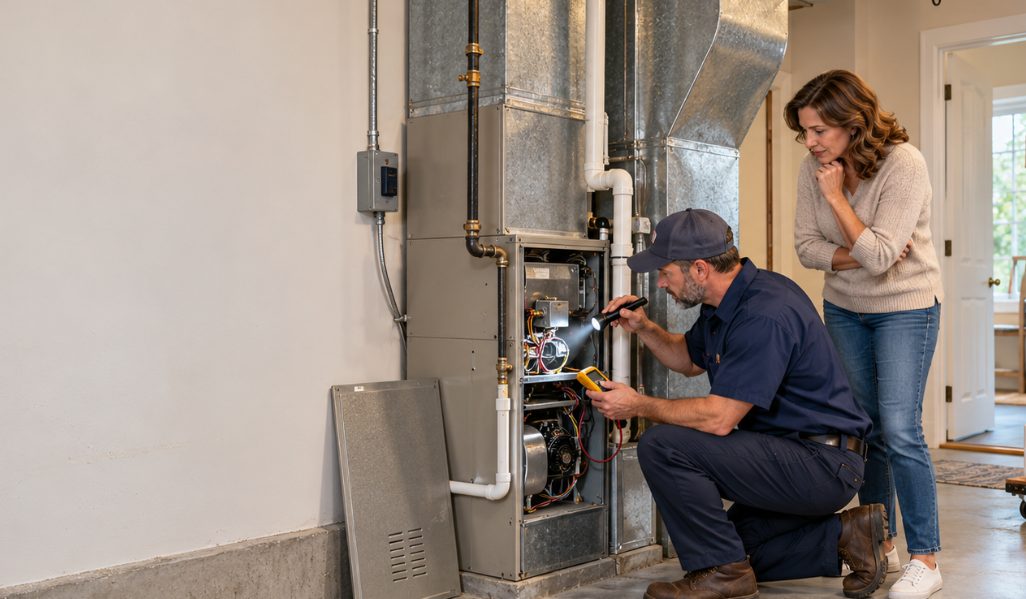
Should you repair or replace your HVAC system? Your air conditioner stops working, the technician hands you a repair estimate, and suddenly you're facing a much bigger question. There isn't one answer for every home.
A 12-year-old system that needs one inexpensive repair may have several good years left. A younger system that keeps breaking down, can't keep the house comfortable and drives up your bills is a different story. The goal isn't to replace equipment just because it's old. It's to figure out whether repairing it still makes financial sense. That means looking at the system's age, repair costs and how often it breaks. It also means weighing energy use, comfort, overall condition, how efficient a new one would be and your plans for the home.
How Old Is Your HVAC System?
Age is one of the first things to consider, but it shouldn't be the only one. ENERGY STAR suggests considering replacement when an air conditioner or heat pump is more than about 10 years old. That's especially true if it needs frequent repairs or no longer keeps the home comfortable. For furnaces and boilers, it points to about 15 years.
That doesn't mean your system must go on its tenth birthday. Maintenance, climate, equipment quality, installation and how hard the system works all affect how long it lasts. Think of age as a risk factor, not a verdict.
- Newer system with a one-time repair: repairing often makes sense.
- Older system with a cheap repair: repairing may still make sense.
- Older system with repeated expensive repairs: replacement deserves a serious look.
The older the equipment gets, the more the rest of this guide matters.
How Much Is the HVAC Repair?
This is usually where the decision gets uncomfortable. A few hundred dollars for a small part on an otherwise healthy system is very different from putting thousands into aging equipment. Ask your HVAC contractor:
- What exactly failed, and what caused it?
- Will this repair bring the system back to normal?
- Are other major parts showing wear?
- Is this a common one-time repair or a sign of bigger problems?
- What warranty comes with the repair?
- How much longer should the system last after the repair?
The key question isn't just “How much does the repair cost?” It's “What am I getting for that money?” If a $700 repair buys several more years, that can be a great decision. If a $2,500 repair goes into a system that will likely need another big repair soon, replacement becomes easier to justify.
How Often Are You Repairing It?
One repair doesn't mean your system is failing. Repeated repairs are different. ENERGY STAR lists frequent repairs combined with rising energy bills as a sign that replacement may be worth considering.
Look back over the last several years. Have you replaced capacitors, blower or fan motors, control boards, refrigerant parts, ignition parts or a compressor? One repair every few years may just be normal wear. But if you call a technician every summer or every winter, the math starts to change. You may be paying to keep equipment running that keeps getting less reliable.
Are Your Energy Bills Going Up?
Heating and cooling use a big share of a home's energy. ENERGY STAR estimates nearly half of the energy in a typical home goes to heating and cooling. So HVAC efficiency can have a real effect on your utility bill.
But a rising bill doesn't always mean your HVAC needs replacing. Higher bills can also come from:
- Utility rate increases or extreme weather
- More people in the home, or thermostat changes
- Air leaks, poor insulation or leaky ducts
- Dirty filters or skipped maintenance
- New appliances or electric vehicle (EV) charging
That's why it helps to look at your energy use (kWh), not just the dollar amount. If your utility raised rates 15%, your bill can go up even if you use the same amount of energy. But if your system uses more and more electricity to keep you just as comfortable, its efficiency may be slipping.
Is Your House Still Comfortable?
Your HVAC system has one main job: keeping your home comfortable. Signs it's struggling include:
- Rooms that are always too hot or too cold
- Weak airflow from the vents
- Too much humidity, or very dry air
- Very long run times, or turning on and off often
- Trouble reaching the thermostat setting
- Big temperature differences between floors
- Unusual noise
Uneven temperatures can come from the equipment. They can also come from ducts, insulation, air leaks or other problems with the house itself. That difference matters. A new HVAC system won't fix a problem caused by the house.
Check the House Before You Replace the HVAC
This step can save you a lot of money. Say your upstairs is always hot in summer. It's easy to think, “My air conditioner isn't big enough.” But the real cause could be:
- Poor attic insulation or air leaks
- Leaky ducts, poor airflow or too few return vents
- A system that isn't balanced between rooms
- Strong sun heating the rooms through windows
- Equipment that was the wrong size from the start
ENERGY STAR recommends fixing major air leaks and duct problems before buying new heating and cooling equipment. Those issues can be the true cause of comfort and efficiency problems. A bigger system that doesn't fix them can even create new ones.
Bigger HVAC Equipment Isn't Always Better
Many homeowners assume that if a 3-ton air conditioner struggles, they should just install a 4-ton system. That's not how sizing should work. Oversized equipment can turn on and off too often. That can make the home less comfortable and wear out the equipment sooner.
The right size depends on the home itself: its size, insulation, windows, climate, which way it faces, air leaks, ducts, how many people live there and heat from appliances. That's why a professional load calculation matters when you replace equipment. The goal isn't the most capacity. It's the right capacity.
How Efficient Is Your Current System?
Older equipment can still run reliably while using more energy than a newer system. That's where the decision gets more nuanced. Say your air conditioner is 13 years old. It still works, but it needs a big repair. Don't just compare the repair cost with the replacement cost. Compare the full picture:
- Repairing: the repair cost, plus future energy use, plus likely future repairs.
- Replacing: the replacement cost, plus future energy use, minus the repairs a warranty would cover.
A properly installed high-efficiency system can lower heating and cooling costs compared with older equipment. Actual savings depend heavily on your home, climate, current equipment and installation. Efficiency savings alone don't always justify replacing a working system. But they matter much more when you're already facing a big repair.
A Simple Repair-or-Replace Checklist
Repairing may make more sense when:
- The system is fairly young and rarely needs repairs.
- The current repair is minor or moderate.
- The home stays comfortable, and energy use is steady.
- The system is generally dependable and otherwise healthy.
- You plan to move soon, or significant warranty coverage remains.
Replacing may deserve a closer look when:
- The equipment is older and breaks down often.
- The current repair is major and expensive.
- Some rooms are always too hot or too cold.
- Energy use keeps rising with no clear reason.
- Several parts are aging at once.
- You plan to stay for many years, and the warranty has run out.
No single item decides it. What matters is the combination.
Should You Use the “$5,000 Rule”?
You may see advice online to multiply your system's age by the repair cost. If the result is more than $5,000, the rule says to replace it. For example, a 12-year-old system with a $500 repair scores 6,000. It's a handy shortcut, but it shouldn't make the decision for you.
A formula doesn't know the condition of your compressor, your home's insulation, your repair history or your local energy costs. It doesn't know how long you'll stay, whether the system was installed well, or whether a $1,500 repair could buy five more years. Use rules of thumb to start the conversation. Use your real numbers to make the decision.
How Long Will You Stay in the Home?
Your plans matter. If you expect to move in a year or two, you may weigh replacement differently than someone staying 15 more years. That doesn't automatically mean you should repair before selling. Buyers may notice very old equipment, weak cooling, odd noises or skipped maintenance. But you also shouldn't spend thousands on a new system you won't benefit from without running the numbers. Ask yourself: how much of this investment will I actually use or get back?
Don't Forget About Heat Pumps
If you're replacing central air conditioning, ask whether a heat pump makes sense. A heat pump heats and cools. Modern air-source heat pumps work in a wide range of climates. They use much less electricity for heating than electric resistance heat because they move heat instead of making it.
Whether a heat pump pays off depends on your climate, your current furnace and your electricity, gas or propane prices. Your home's efficiency, the equipment cost, available incentives and your electrical panel matter too. Again, the right answer depends on the home.
Installation Matters as Much as the Equipment
An expensive high-efficiency system doesn't guarantee high-efficiency results. Poor installation can cut efficiency a lot and shorten the equipment's life. When you compare quotes, don't just compare the brand, the SEER rating (a cooling efficiency score) and the price. Also ask whether the contractor will check:
- Load sizing for your home
- Duct condition and air pressure in the ducts
- Airflow and return-air capacity
- Refrigerant charge
- Testing and setup after installation
The lowest equipment price isn't always the lowest long-term cost.
10 Questions to Ask Before a Major HVAC Repair
- What failed?
- Why did it fail?
- What is the total repair cost?
- What other major parts are showing wear?
- How old is the system?
- What warranty comes with this repair?
- How long should the system last after the repair?
- What would a replacement cost?
- How much more efficient would a replacement be?
- Are duct, insulation, airflow or air-leak problems adding to the issue?
These questions turn a stressful emergency into a clear financial comparison.
So, Should You Repair or Replace Your HVAC System?
Start with five questions: How old is the system? How expensive is this repair? How often has it needed repairs? Is it still keeping the home comfortable without wasting energy? How long will you stay?
If the equipment is fairly young, reliable and cheap to repair, repairing may make perfect sense. If it's aging, costly to run, breaking down often and facing another big repair, replacement is worth a close look. Just don't decide on age alone. Compare the cost of keeping the system with the cost and benefits of replacing it.
The Ashborn Approach
At Ashborn Partners, we don't think an old HVAC system automatically means you need a new one. We also don't think the cheapest repair means you should keep fixing aging equipment forever. We look at the house as a system. An Advisor considers your system's age, repair history and the current repair cost. They also look at your energy use and utility costs, comfort, ductwork, insulation and air leaks. How long you'll stay and any other upgrades you're considering matter too. Sometimes the right answer is to repair it and keep going. Sometimes it's time to replace it. And sometimes the HVAC isn't the main problem at all. Ashborn connects you with participating providers serving your area.
The goal isn't to sell you a new system. It's to put your home and your money in the best position for years to come.
Equipment life, repair costs and efficiency savings vary by home, climate, equipment and installation. Dollar figures in this guide are hypothetical examples. Rules of thumb are general guidance, not a recommendation for any specific system.